

Strengthening Jewish Life in São Paulo for Tomorrow
Alessandra Andrei
Brazil
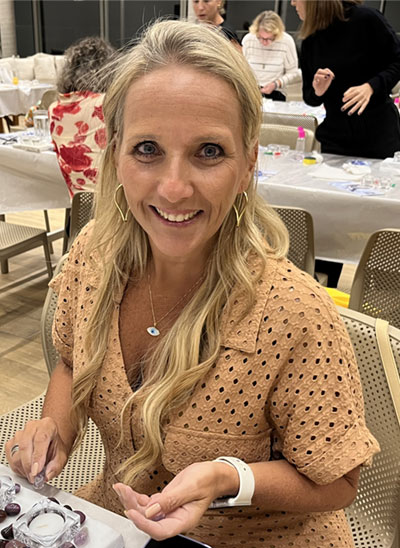 Ensuring a strong Jewish future for the next generation has always guided my involvement in the community. Over the years, I’ve chosen to channel this commitment into active leadership and participation across several areas of Jewish communal life. A central part of this is my involvement with Israel Bonds and its Women’s Division in Brazil. For me, supporting the relationship between diaspora communities and Israel is not only about solidarity today, but about helping ensure that future generations feel connected to their identity, their history, and the
Jewish people.
This connection was further strengthened through my experience volunteering with Taglit/Birthright in Israel. Being immersed in the country, engaging with people, and contributing directly to the community was truly transformative. It reinforced my Jewish identity, deepened my sense of belonging, and showed me how meaningful, hands-on experiences, can inspire and empower the next generation to understand their heritage and take active roles in Jewish life.
In São Paulo, my volunteer work extends across several areas, including education, social support, and community institutions. In education, I am involved with the Scholarship Fund Project, “Fundo de Bolsas” an initiative that gives school-age children from families with limited means the opportunity to study at Jewish schools known for their academic excellence and strong values-based education. I firmly believe that ensuring access to this kind of education is one of the most effective ways to strengthen Jewish identity, belonging, and continuity.
I also volunteer with Unibes, an organization that supports individuals and families in vulnerable situations by providing access to food, housing, medical care, and other essential services. This work puts core Jewish values into practice, such as solidarity, dignity, and social responsibility, while strengthening bonds within the community itself. By supporting children’s access to Jewish education, we help ensure that future generations can grow up with a strong sense of identity, belonging, and commitment to the community.

Jewish life will not only endure but continue to grow and flourish in Brazil, in Israel, and wherever we are.

Another meaningful area of my volunteer involvement is Clube A Hebraica, a traditional Jewish sports and social club that plays a central role in Jewish life in São Paulo. Beginning in 2026, I will serve as a member of its Administrative Council, with a commitment to responsible governance, active engagement with members, and alignment with core community values. I see this role as a natural continuation of my long-standing involvement and desire to contribute to a strong and vibrant community.
At a time when antisemitism has become more visible, I believe the most effective response lies in unity, education, and pride in Jewish identity. What gives me hope is seeing a community where individuals are willing to engage, lead, and care for one another, creating a foundation on which the next generation can thrive. I am confident that through this collective commitment, Jewish life will not only endure but continue to grow and flourish, in Brazil, in Israel, and wherever we are.
Marching Toward a Stronger Tomorrow
Scott Saunders MBE
March of the Living International CEO,
Founder and Chairman of March of the Living UK.
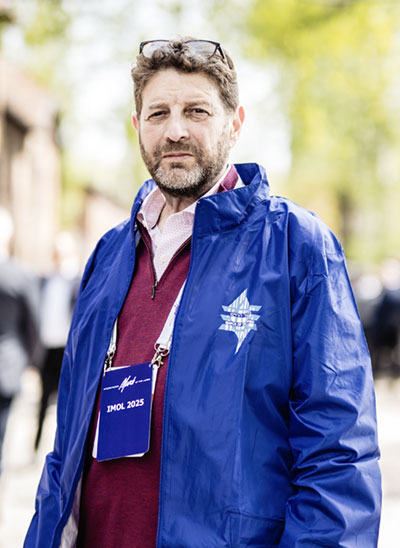 As we enter a new calendar year, marked by both challenge and possibility, Jewish communities across the UK are thinking deeply about how we safeguard our future. The murderous attack at the Chanukah celebrations on Bondi Beach is just the latest reminder that we live in a time of rising antisemitism. Never have programmes and initiatives that strengthen Jewish identity, education, and pride been more important. The purpose of March of the Living, which plays a profound role in shaping the next generation of Jewish leaders, educators, and advocates, has never been
more valuable.
March of the Living takes young people on a journey of remembrance, resilience, and responsibility. By walking from Auschwitz to Birkenau alongside peers from around the world, participants do more than learn history. They experience it.
This immersive educational model ensures that Holocaust memory is not abstract or distant, but deeply personal and enduring. The impact continues long after the March itself, as participants return to their communities, workplaces and universities with a renewed sense of Jewish identity, connection, and moral clarity.
Education lies at the heart of this work. Through extensive pre-March learning and powerful post-March engagement, young people are equipped with the knowledge and confidence to confront antisemitism and Holocaust revisionism and denial wherever they encounter it.
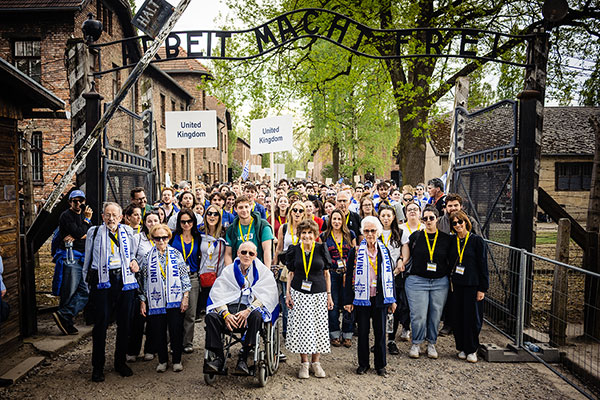
March of the Living 2025 UK delegation led by survivors.
The work of March of the Living fosters pride, solidarity and resilience. Participants often go on to take leadership roles in schools, universities, synagogues and communal organisations, using their experiences to educate others and advocate for a vibrant Jewish future.
Over and above the March, our programmes such as Tomorrow’s Testimony further strengthen this mission by bringing children - the next generation - and survivors together. Creating the witnesses of the future and ensuring that even as survivor voices become fewer, their testimonies remain alive and meaningful for future generations.
Importantly, March of the Living is an international endeavour. Bringing together Jews and non-Jews from across the globe. Young people from the UK, USA and many countries around the world including Germany, Mexico, Brazil, come together to create a powerful community united by memory and purpose. This international dimension offers hope: that through education, connection, and collective responsibility, Jewish life will not only endure but continue to thrive and flourish for generations to come.
Photos by Blake Ezra Photography.
Terror, Hatred, and the Responsibility of Society
Sacha Stawski
Germany
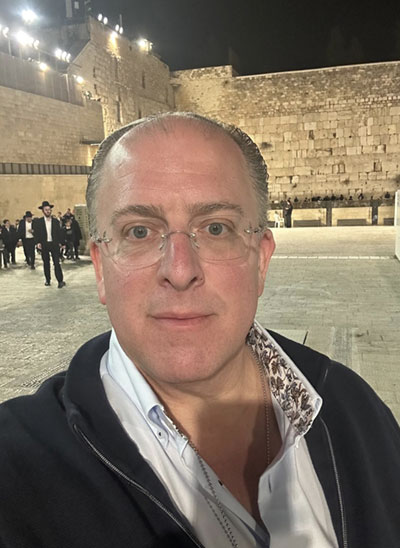 For two years, people in Israel have been forced, day and night, to seek shelter whenever sirens sound, while worrying about their families and loved ones. Everyone knows someone affected by October 7. Almost no one has been spared the pain of losing someone murdered that day or since, and nearly every family has members who have fought or continue to fight for their homeland. Hundreds of hostages were abducted, many remaining captives until very recently. Hamas bears full responsibility for this violence, not least because of the more than 700 kilometres of tunnels it built beneath Gaza. False accusations of “genocide” continue to spread despite the complete lack of evidence.
Even in the Diaspora, the anxiety is constant. Every alert or report of an attack on Israel reminds us that our families, friends, and the Jewish state remain under threat. Here in Germany and across Europe, Jewish people face daily hatred and intimidation. This is precisely where our mission lies: to push back against this wave of hostility, to slow it even if we cannot stop it completely, and to counter double standards, delegitimization, and demonization with truth and resolve.
In Germany, Europe and worldwide, hate demonstrations increasingly target Jewish institutions
Every day, Jews experience harassment and exclusion—being turned away from restaurants, barred from sports and cultural events, and threatened openly in demonstrations and daily life. In Germany, Europe and worldwide, hate demonstrations increasingly target Jewish institutions, and attacks on police officers and civilians have also occurred. Extremist groups exploit freedoms of speech and assembly to spread antisemitic propaganda, while interconnected networks from Europe and North America to the Middle East amplify hate through coordinated misinformation and online campaigns. False accusations against Israel are deliberately spread to incite hatred. These challenges demonstrate why local engagement and awareness are essential.
For decades, Hamas has used violence as a political tool. It exploits hostages as bargaining chips, deliberately targets civilians, and manipulates global media attention. Even when ceasefires or diplomatic agreements such as the Abraham Accords bring moments of hope, the financial and ideological infrastructure of Hamas and its supporters, some of it right here in Germany, remains intact. Radical groups continue to march for Israel’s destruction under slogans such as “From the River to the Sea,” “Globalize the Intifada,” “Intifada Until Victory,” or “There is only one solution—Intifada Revolution.” These structures do not disappear even when peace advances in the Middle East, and radical groups continue to threaten Jewish life worldwide.
At Honestly Concerned e.V. and ILI – I Like Israel e.V. we stand on the front lines against threats, antisemitism, and misinformation. Through educational campaigns and events, we reach 1.5 million people per month on our channels and have organized dozens of events nationwide, showing solidarity, combating hate, and strengthening Israel.
Our mission is to slow the spread of hatred, protect Jewish life, and promote truth. We are deeply grateful to everyone who has supported us through vigils, rallies, information booths, letters, donations, membership or other actions. Your ongoing commitment and engagement are invaluable.
Two years after October 7, one truth remains: your vigilance, your voice, and your action are crucial to making Jewish life worldwide safer.
To learn about Honestly Concerned e.V. follow them on Facebook.
From the Classroom to an Immersive Experience
Rosy Zonana
Creative Coordinator at the Shimon Peres Immersive Museum, Mexico
 As part of today’s global challenges, Colegio Hebreo Maguen David, (Maguen David Jewish School) in Mexico City, serving students from early childhood through high school, offers educational experiences aimed at strengthening Jewish identity and preparing students to actively engage in society. Through diverse learning approaches, students become creators of meaningful content that combines creativity with hands on participation.
Each year, students create immersive projects on a variety of topics ranging from the Holocaust, commemoration of October 7, happiness, the meaning of the Hebrew letters, and much more. These projects showcase creativity, dedication, and sensitivity, as well as a profound grasp of the subject matter, while exploring the values, memory, and history of the Jewish people through a contemporary lens.
Throughout the process, students embark on a creative journey to develop skills in storytelling, illustration, animation, and thoughtful use of technology. Guided by an interdisciplinary team of teachers, students are guided from their initial engagement with narrative and imagery to visual composition, animation, and musical adaptation of the material. Along this journey, educators help expand students’ expressive abilities, foster new creative skills, and provide them with tools to communicate complex ideas—preparing them for a rapidly changing world while staying firmly grounded in their values and identity.
This year’s Immersive exhibition is the Museo Inmersivo Shimon Peres (Shimon Peres Immersive Museum). Created by the students, the exhibit highlights the life and impact of Shimon Peres, former Prime Minister and President of Israel and Nobel Peace Prize laureate for his work on the Oslo Accords, a historic effort to promote peace between Israel and the Palestinians.
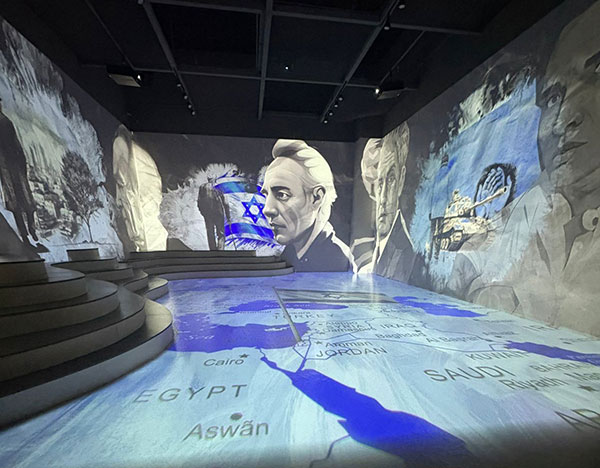
Inside the Museo Inmersivo Shimon Peres, visitors are surrounded by storytelling in a fully immersive experience.
The impact of these projects extends beyond the school setting as the museum is open to the community for guided visits. Recently, the Women’s Division of Israel Bonds in Mexico together with Israel Bonds executive director in Mexico, Saul Kisel, toured the interactive space. We are grateful they were able to see firsthand the creative, reflective, and technologically driven work produced by the students, showcasing the educational and communal value of this initiative.
In a global context where antisemitism remains present, these projects strengthen resilience and collective self-esteem. By giving students a voice and space to to express their Jewish-Mexican perspective in a creative and positive way, the initiative fosters pride, solidarity, and a genuine sense of belonging.
This unique initiative gives students agency over their learning and pride in their accomplishments, which they can share with the community. When young people actively engage with their heritage, Judaism is not only preserved, it flourishes, thrives and inspires hope for the future of Jewish life in our region.
Guided tours available upon request info@chmd.edu.mx
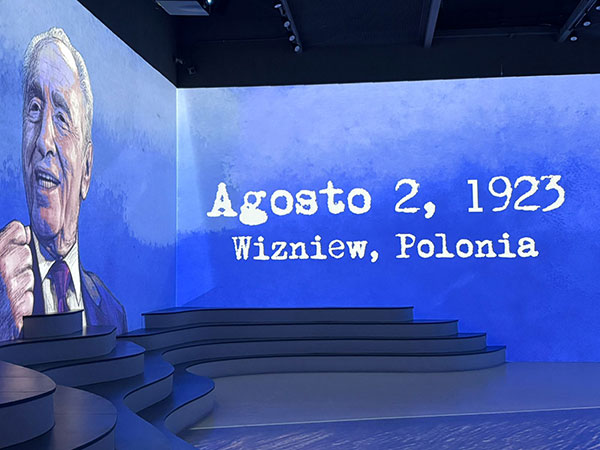
At the Museo Inmersivo Shimon Peres Images transform the space into a living narrative.
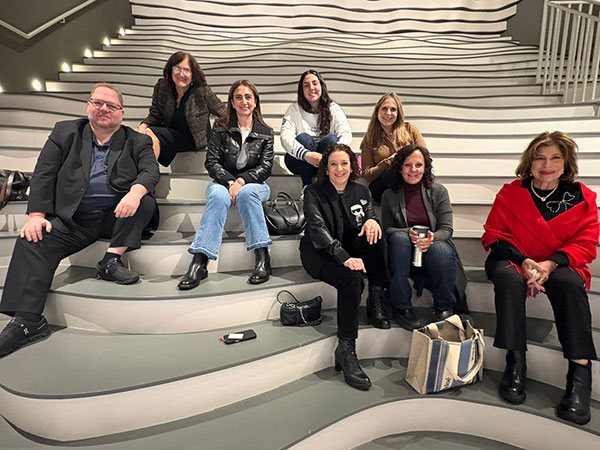
Saul Kisel and members of Israel Bonds Women’s Division in Mexico during their visit to the museum.
Living, Learning, and Leading in France
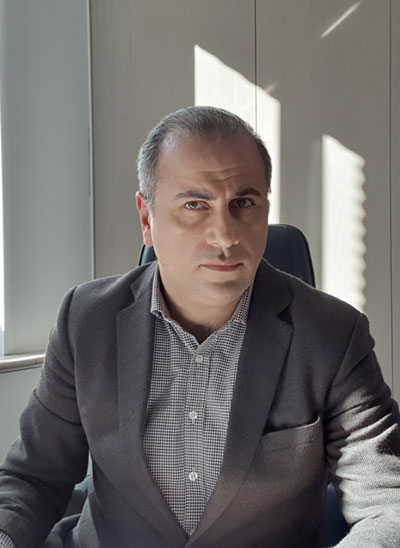
Jonathan T.
Israel Bonds International, Executive Director for French-speaking countries.
 Over the past two years, the future of Jewish life in France has become a central subject of public conversation. The dramatic rise in antisemitic incidents since 2023, more than 1,600 recorded that year alone, has deeply unsettled Jewish families, educators, and institutions. Yet alongside fear and uncertainty, something else has been unfolding: a renewed focus on strengthening Jewish identity, educating the next generation, and staying civically engaged.
Jewish leaders have been vocal in urging that antisemitism is not met with silence or withdrawal. Yonathan Arfi, President of the CRIF (Representative Council of Jewish Institutions in France), has been one of the most prominent voices. In interviews, he has spoken of the need for a “combative civic Jewish identity,” insisting that Jews remain active participants in French society. His message resonates widely, especially among young adults who refuse to disappear from public life or hide their Jewishness.
This emphasis on visibility and confidence is reflected at the community level as well. Local synagogues, youth movements, and cultural organizations have expanded programming aimed at educating and empowering the next generation. For example, the liberal congregation JEM recently introduced new classes for teenagers focused on the history of antisemitism, helping students recognize patterns, strengthen identity, and develop the confidence to speak up. These initiatives are designed not only for safety, but for continuity, ensuring that Jewish knowledge, culture, and pride are transmitted forward.
Another key initiative launched this month at the Moadon center is the OZ project, created in response to rising antisemitism in France and the need for Jewish communities to live their identity with greater confidence and preparedness. Designed for all generations, Oz is built around three complementary pillars: understanding historical and contemporary facts, learning how to react through self-defense, protection and first aid, and developing the ability to communicate and transmit ideas effectively to any audience. This special Friends & Family pre-launch evening offered a first look at the Oz format through interactive, expert-led workshops in a practical and engaging setting, true to Moadon’s educational approach.
The conversations themselves reflect a community actively preparing for its future rather than simply reacting to the present.
At the same time, rabbis and educators are working closely with parents to address the difficult questions raised by current events: How do we raise our children Jewishly in a climate of hostility? What kind of Jewish life do we want them to inherit? The answers vary, but the conversations themselves reflect a community actively preparing for its future rather than simply reacting to the present.
Today, alongside these conversations, French Jewish communities are investing in programs that build connection, identity, and leadership for the next generation. Youth groups, educational trips, and camps are helping young people deepen their connection to Jewish heritage, cultivate pride in their identity, and develop the confidence to engage meaningfully in communal life. Leadership programs for students and emerging adults equip the next generation to confront challenges with knowledge, resilience, and a sense of responsibility for sustaining Jewish life.
New community initiatives and partnerships are also creating spaces for dialogue, understanding, and civic engagement. By combining education, mentorship, cultural activities, and collaborative projects, the Jewish community in France is not only responding to current challenges but actively shaping a future in which Jewish identity, participation, and community continue to grow and thrive.