


Strength Runs Through our Veins
Shirel Guenoun
Frankfurt
 Imagine a young woman with four small children and a newborn, having to hide in the forest under extreme temperatures, lacking food and water and having nothing but hope for a miracle that could save her life. After escaping from the Nazis in Poland and making her way through the woods arriving in the Soviet Union, she was able to board a ship that would take her and her children to the unknown, leaving her beloved husband behind, after he lost his life fighting for what he believed everyone had the right to have: freedom!
This may sound like another Holocaust survivor story, but for me is part of the story that shapes who I am today. This brave woman’s name was Rebeca List, my great-grandmother, who, with her unbelievable strength, resilience and composure, turned her challenges into possibilities, and fought to rebuild her life on a new continent, and overcome the numerous difficulties she went through.
Until this day, Rebecca´s story gives me the strength to face all of life’s challenges, big and small – from the difficulties of leaving my parent’s home at a young age, to raising three small children far from home, to navigating complex bureaucracy and adapting to a foreign country while preserving our Jewish lifestyle and confronting hate.
Through my journey I have learned how to overcome these challenges and fight for a better life. Knowing that this strength runs in my blood, the same strength and resilience that runs through the entire Jewish nation, helps me overcome the hardest times.
We are soon celebrating the holiday of Passover – the Festival of Freedom– when, after such a long period of pain and slavery, the Jewish nation was finally liberated from Egypt in order to receive the Torah as free people.
Memory and imagination give us the ability to associate with events from the past. While physically we are bond by time and space, in our minds we can travel without limits. Remembering is a spiritual achievement, the more spiritual we are, the more intensely we can experience it´s message and inspiration.
This is one of the reasons why we must remember the liberation from Egypt in every generation, every day, and every Jew should see themselves as if they had been freed from Egypt on that day. To do this, one must transcend their limits, temptations and obstacles that physical existence places in the way of spiritual life, the same way the Jews were liberated from their limitations and boundaries as slaves in Egypt.
By facing our daily challenges, and freeing ourselves from these boundaries, we can finally achieve and experience true freedom. When the conflict between what is physical and what is Divine ends, we can enjoy the sense of serenity and harmony that freedom brings to our lives, and to the world.
Passover: A Story of Memory and Continuity
Eyla Benedykt
Brazil Representative
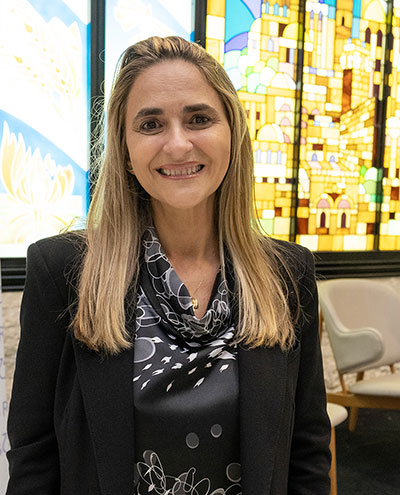 For me, Passover has always been more than a religious celebration; it is a moment deeply connected to memory, family, and the stories that span generations. Each year, when we gather for the Seder, I am reminded that we are not only retelling an ancient narrative of the journey from slavery in Egypt to freedom but also celebrating the personal journeys of every family.
In my childhood, I remember celebrating Passover in Uruguay, always surrounded by my entire family. My grandfather would lead a long Seder, rich in tradition and meaning. For us children, there was also the joyful anticipation of searching for the Afikomen, the piece of matzah hidden during the meal, a moment that made the evening even more special and engaging for us all. These memories have stayed with me deeply, not just as childhood recollections, but as part of the traditions and identity I inherited from my family.
Years later, when we moved to Brazil, the tradition continued, now at my uncle’s home. Even in a different country, the spirit of Passover remained the same: reading the Haggadah, singing the Passover songs, and sharing the table with those we love. These traditions showed me that even when we change countries or homes, the values and customs we carry with us keep our story alive.
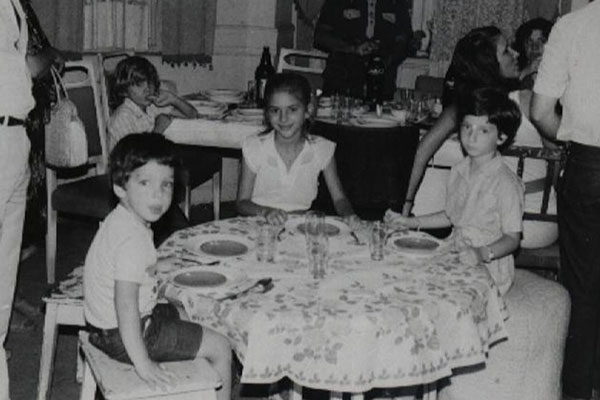
Passover reminds us that each generation receives a legacy and carries the responsibility to pass it forward. The story of the Exodus speaks of freedom, but also of resilience, hope, and continuity. By telling this story year after year, we honor those who came before us and teach the next generations the importance of never forgetting where we come from.
For me, celebrating Passover is exactly that: keeping alive the memory of the journey from slavery to freedom and ensuring that the stories, traditions, and values we have received continue to illuminate the path for future generations.
Today I celebrate Passover with my daughters and my husband’s entire family. Over 30 people gather at our Seder, in a night full of joy and participation. We put on a small play and tell the younger ones about Pharaoh, the plagues, the miracles, and the Exodus from Egypt. We sing together and relive, in a lively and joyful way, this story that is part of who we are. And, as in every Seder, we never forget the symbols of Passover; the matzah, the maror (bitter herbs), which remind us of the bitterness of slavery and the haste of liberation, reinforcing the importance of remembering and passing this legacy on from generation to generation.
The Matzahs That Survived the Inquisition and
Live On Today.
Eli Suli
Mexico
 In 1497, King Manuel of Portugal attempted to “resolve the Jewish question” not by expelling the Jews, but by forcing them all to convert. With no option of leaving the country, thousands were forced to be baptized. This is how the so-called “Marranos (or crypto Jews)” came to be, compelled to prove publicly that they had abandoned their faith. In Hebrew, however, they are called “Anusim” — those bitterly forced: Christian on the outside, and Jewish within.
For centuries, the Anusim lived a double life: prosperous businesses, yet under constant suspicion; homes illuminated by candles that had to remain hidden; prayers whispered behind closed doors. The Portuguese Inquisition, established in 1536, spread terror, torture, and burnings at the stake. Generations grew up learning to remain silent in order to survive. And yet, a spark remained.
In the mountains of Belmonte, a small group decided not to let memory die. There, far from inquisitorial eyes, the women of the village kept the Jewish calendar in their hearts. They remembered Yom Kippur, observed what they could of kashrut, and each year, on the eve of Passover, secretly baked matzah. Not just for one generation, but for nearly four centuries.
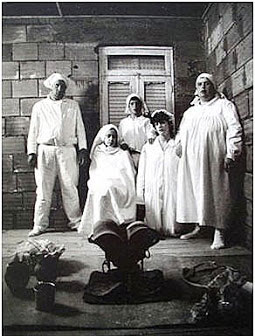
Marranos of Belmonte, Portugal, in the 1970s, dressed in their traditional Passover attire, baking matzah. Photo courtesy of Eli Suli
This went on from 1536 until 1920, when they finally learned that the Inquisition no longer pursued them. Those women kneaded flour and water as one kneads identity. There were no rabbis to supervise, no open books laid upon the table, only the memory of a tradition transmitted from generation to generation during 384 years to the next generations. A clandestine matzah bakery that felt like freedom.
In the 1920s, the Jewish engineer Samuel Schwartz arrived accidentally in the village of Belmonte, in northern Portugal, and discovered something the world had long considered lost: a living crypto-Jewish community. Decades later, with the return of democracy in 1976, the Anusim began to emerge from hiding. In 1990, a synagogue was inaugurated in Belmonte, and today there is a museum, kosher products, and vibrant Jewish life. And those women continue to bake their own matzahs, though no longer in secret.
But the true miracle was not the construction of new walls, it was the preservation of an ancient flame.
Our sages taught that by the merit of righteous women, the people of Israel were redeemed from Egypt. In Belmonte, it was also women who sustained their own silent exodus. They understood that identity is not only what is proclaimed in public, but what is transmitted at home.
This story does not only speak about the past; it also asks us: what stories of freedom and resilience have we inherited, and which will we pass on to the next generations?
For the building of the future begins with small, steady gestures at the family table and in the traditions we choose not to let go.
Belmonte reminds us that a people may be persecuted, silenced and forced but as long as there is a mother who teaches, a family that remembers, a matzah baked with emunah (faith), history continues. Am Israel Chai veKayam — The People of Israel live and endure.
Journey to Belonging
Orit Usharovsky
Senior Sales Executive - United Kingdom
 I was ten years old when my family made Aliyah from Belarus to Israel. For my parents, it was a Zionist decision — an ideological step toward home. For me, it was the beginning of an adventure. I remember feeling excited for the new life ahead.
My first memory of Israel is not the airport, but the drive from it, looking out of the window and seeing orange trees lining the streets. And the heat. I couldn’t understand how it could possibly be so hot in November.
We arrived not knowing Hebrew. Overnight, I found myself in a classroom where I understood almost nothing. I had a heavy accent, a different look, and felt like an outsider. Fitting in was not easy. The teachers were not always patient. But I had one friend, and we struggled together, two children navigating a new language and a new world side by side.
Yet alongside the difficulty was something extraordinary: belonging.
In Belarus, we did not live an openly Jewish life. In Israel, Jewish holidays shaped the rhythm of the year. Hebrew filled the streets. There was no need to hide who you were. My first Seder in Israel was a communal one. I couldn’t follow much of what was being said, but I remember feeling part of something bigger, something ancient and alive.
Passover tells the story of leaving Egypt and stepping into uncertainty in pursuit of freedom. At ten years old, I did not see my move as an exodus. But looking back, I understand that it was exactly that — a journey from one reality into another, from limitation into possibility, from quiet identity into proud belonging.
That experience shaped me. It made me stronger, more mature, more resilient. It rooted my Jewish identity deeply within me.
Today, after twenty-five years of living in England, I still feel that Israel is my true home. It lives deep in my heart. And as I raise my children, I hope they will carry forward that same sense of connection, that Jewish life is not something to hide, but something to live fully and proudly.
Passover reminds us that in every generation, we each have our own journey. Mine began at ten years old, under orange trees in November heat — and it continues still.